gdf

Disability empowerment & development

Inclusion should be built in, not added later.

We work toward environments where people with disabilities can access opportunity, exercise autonomy and contribute fully to community life.

What this looks like in practice.

01

Accessible participation and support

02

Awareness of structural and social barriers

03

Pathways to autonomy and opportunity

04

Inclusion across community development

“A more accessible community creates more possibility for everyone.”

Key areas of focus

Support that meets real needs.

Inclusion means removing barriers in the places where people learn, work, travel, receive support, and make decisions.

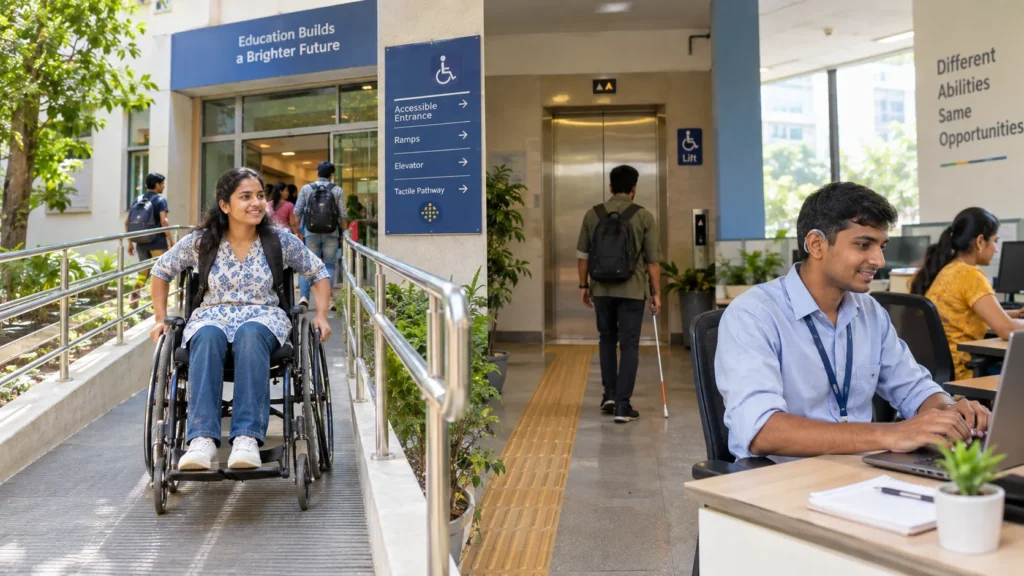
Disabled person accessing education, employment opportunities, and essential infrastructure for an inclusive future.

Access to Education, Employment & Infrastructure

Everyone deserves the chance to learn, earn and take part in community life. GDF advocates for accessible learning spaces, meaningful livelihood opportunities and inclusive public places, so that distance, cost or physical barriers don’t hold anyone back. By listening to communities and working alongside local partners, we help make everyday participation possible, with dignity, confidence and a sense of belonging.
Opening doors to learning

GDF can work with schools, families and local partners to help more children and adults reach learning spaces, so that distance, cost or lack of information doesn’t keep anyone out of the classroom.

Linking people to livelihoods

GDF can connect people with skill-building, guidance and local opportunities, helping them move toward steady work and a sense of independence.

Championing inclusive public spaces

GDF can speak up with communities for safer, more welcoming spaces, such as accessible pathways, shared facilities and community centres, where people of all ages and abilities can take part.

Bringing community voices to decision-makers

GDF can create room for people to share the barriers they face every day and carry those experiences into conversations with local institutions so that solutions reflect real needs.

Support Services & Community Integration

We connect people and families with practical support while strengthening belonging, visibility and participation in community life. Through guidance, patient, hands-on assistance and links with trusted local health and social services, GDF helps those who are often overlooked find the practical help they need, feel welcomed and valued, and take part confidently in the everyday life of their local communities.

Guiding families to the right support

GDF can help families find their way to the services, schemes and entitlements they may not know about. This includes explaining what is available, who to approach and how to take the first step.

Walking alongside people through the process

Paperwork, referrals and unfamiliar systems can feel overwhelming. GDF can offer patient, hands-on help so no one has to work through them alone.

Building bridges between people and local services

By working with local partners, health workers, schools and community groups, GDF can help connect people to the right services close to home.

Creating spaces where everyone belongs

Through community gatherings, peer connections and inclusive activities, GDF can help individuals and families who often go unseen feel welcomed, heard and able to take part in community life.

Person with a disability learning to use assistive technology during a training session.

Assistive-Technology-Linked Training

Assistive-technology-linked training helps people use technology to communicate, learn, work and live independently. GDF explores practical tools and builds skills through simple, hands-on sessions, including screen readers, voice-to-text, magnifiers and communication apps. By supporting learners, older adults, families and caregivers, we make technology more accessible, increase confidence, and open doors to education, employment and greater everyday independence for every person.

Hands-on training with everyday assistive tools

GDF can run practical sessions on screen readers, voice-to-text, magnifiers, hearing aids, and communication apps. People with disabilities and older adults learn to use these tools in simple, local language and at their own pace.

Digital skills for learning and work

GDF can offer step-by-step training in using smartphones, email, online forms and video calls with assistive features switched on. This helps learners and job-seekers study, apply for work and stay connected with greater independence.

Guidance for families, caregivers and helpers

GDF can train family members, teachers, health workers and volunteers to set up, maintain and explain assistive devices. This extends support beyond the training room and into homes and neighbourhoods.

Linking people to devices and support services

GDF can help people find suitable assistive aids, government schemes and trusted professionals, and guide them through the process. Getting the right device then feels approachable instead of overwhelming.

Our commitment

Access is a foundation for belonging.

Disability inclusion is not a separate favour or a final check. It is part of how communities should be designed, with people with disabilities helping define what access, support and participation need to look like.

01

Design for access

02

Listen to lived experience

03

Support autonomy

04

Change attitudes and systems

Looking for support?

Start with a conversation.