
What Determines Life Satisfaction in Older Adults?

Growing older is a natural part of life, bringing new experiences, wisdom, and opportunities for personal growth. While aging often comes with physical, emotional, and social changes, many older adults continue to lead meaningful and fulfilling lives. One of the key indicators of healthy aging is life satisfaction, which reflects how individuals evaluate their overall […]
Successful Ageing: Evidence-Based Habits for a Longer, Healthier, and Happier Life

Growing older is a natural part of life, but ageing successfully involves much more than simply living longer. Advances in healthcare, nutrition, and preventive medicine have shown that many aspects of healthy ageing are influenced by everyday lifestyle choices. By adopting evidence-based habits that support physical, cognitive, and emotional well-being, older adults can maintain independence, […]
The Role of Nutrition in Preventing Cognitive Decline

As people age, maintaining cognitive health becomes an essential part of healthy ageing. While some changes in memory and thinking are a normal part of growing older, significant cognitive decline is not inevitable. Research increasingly highlights the role of proper nutrition in supporting brain function, protecting memory, and reducing the risk of age-related cognitive disorders. […]
Is There a New Definition of Old Age? Understanding Healthy Ageing

Advances in healthcare, improved living conditions, and greater awareness of healthy lifestyles have significantly changed the way people experience ageing. Today, many adults remain physically active, socially engaged, and intellectually productive well into their later years. As a result, the traditional definition of old age is evolving from one of decline and dependency to one […]
Mental Health in Adults Over 70: Why It Deserves More Attention

As life expectancy continues to increase, more people are living well into their seventies and beyond. While physical health often receives considerable attention during later life, mental health is frequently overlooked. Emotional well-being is equally important because it influences quality of life, independence, relationships, and overall health. With timely awareness, family support, and appropriate care, […]
Bridging the Generation Gap in Modern Families

Families has its own traditions, values, and ways of communicating. However, as societies evolve rapidly due to technological advancements, changing lifestyles, globalization, and shifting cultural expectations, differences between generations have become more noticeable than ever. Grandparents, parents, and children often grow up in entirely different social environments, shaping unique perspectives on work, education, communication, and […]
Five Common Challenges Grandparents Face with Generation Z

Grandparents play an important role in providing love, guidance, and emotional support to younger family members. However, the rapid social, technological, and cultural changes experienced by Generation Z have created new dynamics within families. It can occasionally be challenging for grandparents and grandchildren to understand each other due to differences in communication methods, values, and […]
Life After 50 with ADHD: Myths and Realities
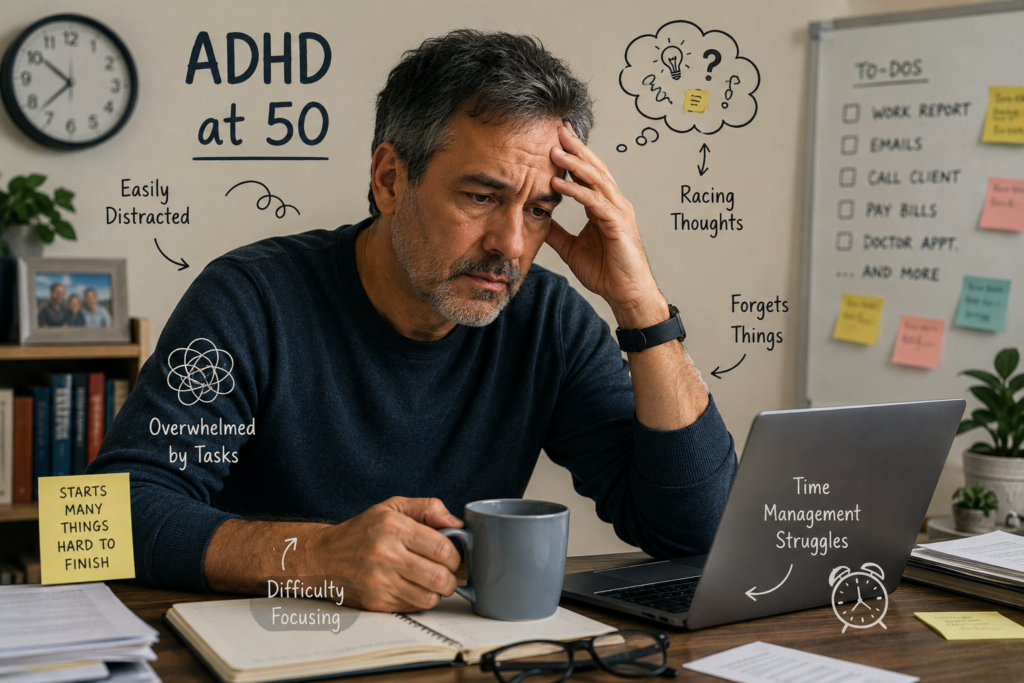
Attention-Deficit/Hyperactivity Disorder (ADHD) is often viewed as a condition that affects only children and young adults. However, many individuals continue to experience its symptoms well into later adulthood, while others remain undiagnosed until after the age of 50. Greater awareness and improved diagnostic practices have helped more older adults understand lifelong challenges that were previously […]
The Hidden Impact of Ageism on Mental Health & Self-Esteem in Older Adults
Growing older should be viewed as a stage filled with wisdom, resilience, and meaningful life experiences. Unfortunately, many older adults encounter negative attitudes that portray aging as a period of decline, dependency, and reduced capability. These misconceptions often become deeply rooted in workplaces, healthcare settings, families, and media representations. Over time, such attitudes can affect […]
How to Recognize & Manage Sundowning in People with Dementia

Memory, reasoning, conduct, and the capacity to carry out daily chores are all impacted by dementia, a degenerative illness. Among the many challenges associated with dementia, sundowning is one of the most distressing for both older adults and their caregivers. Sundowning refers to a pattern of increased confusion, anxiety, agitation, or restlessness that typically occurs […]